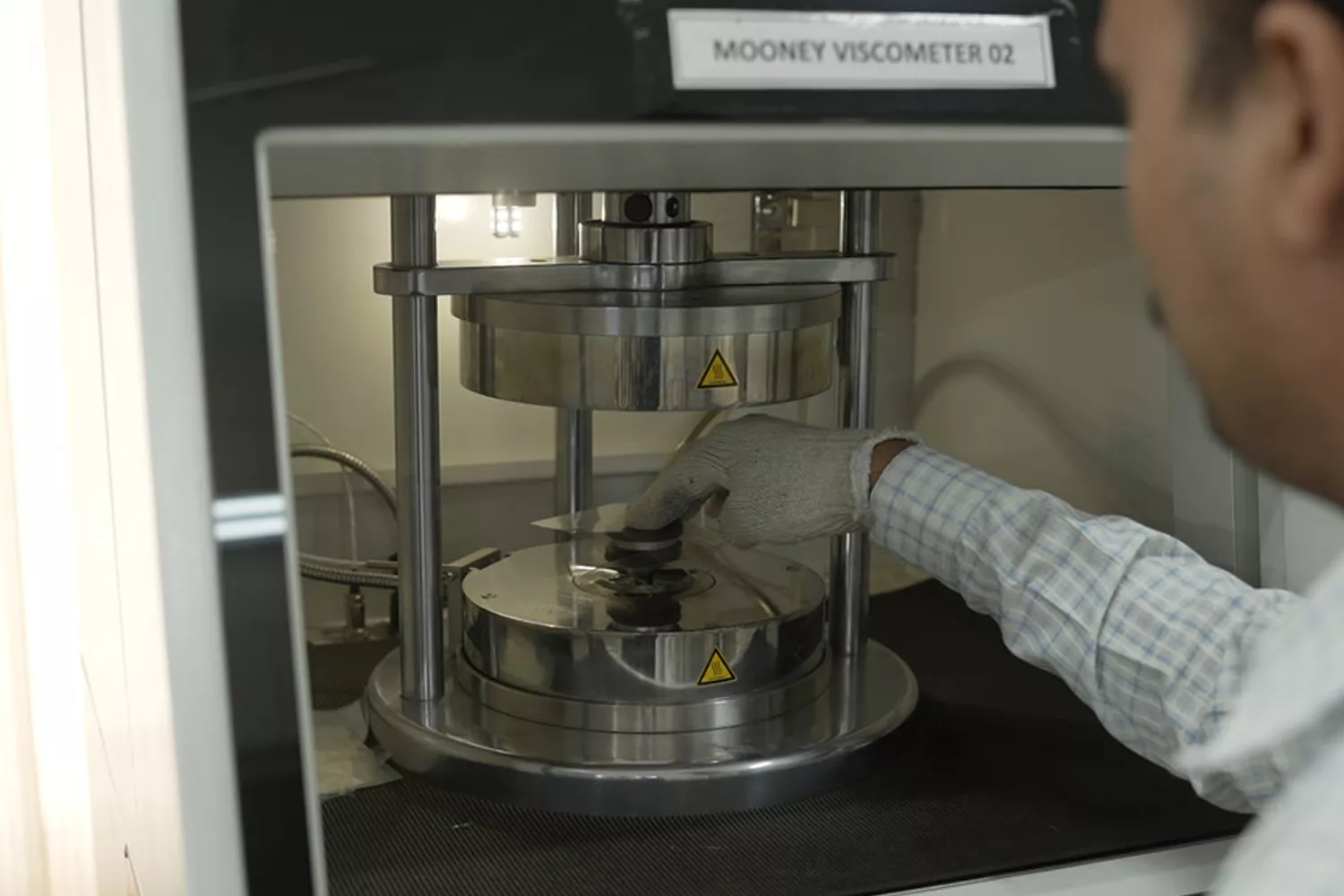
In-Process Testing
Compound viscosity is checked during mixing using a Mooney Viscometer — ensuring the rubber formulation is correct before it ever enters the tyre.
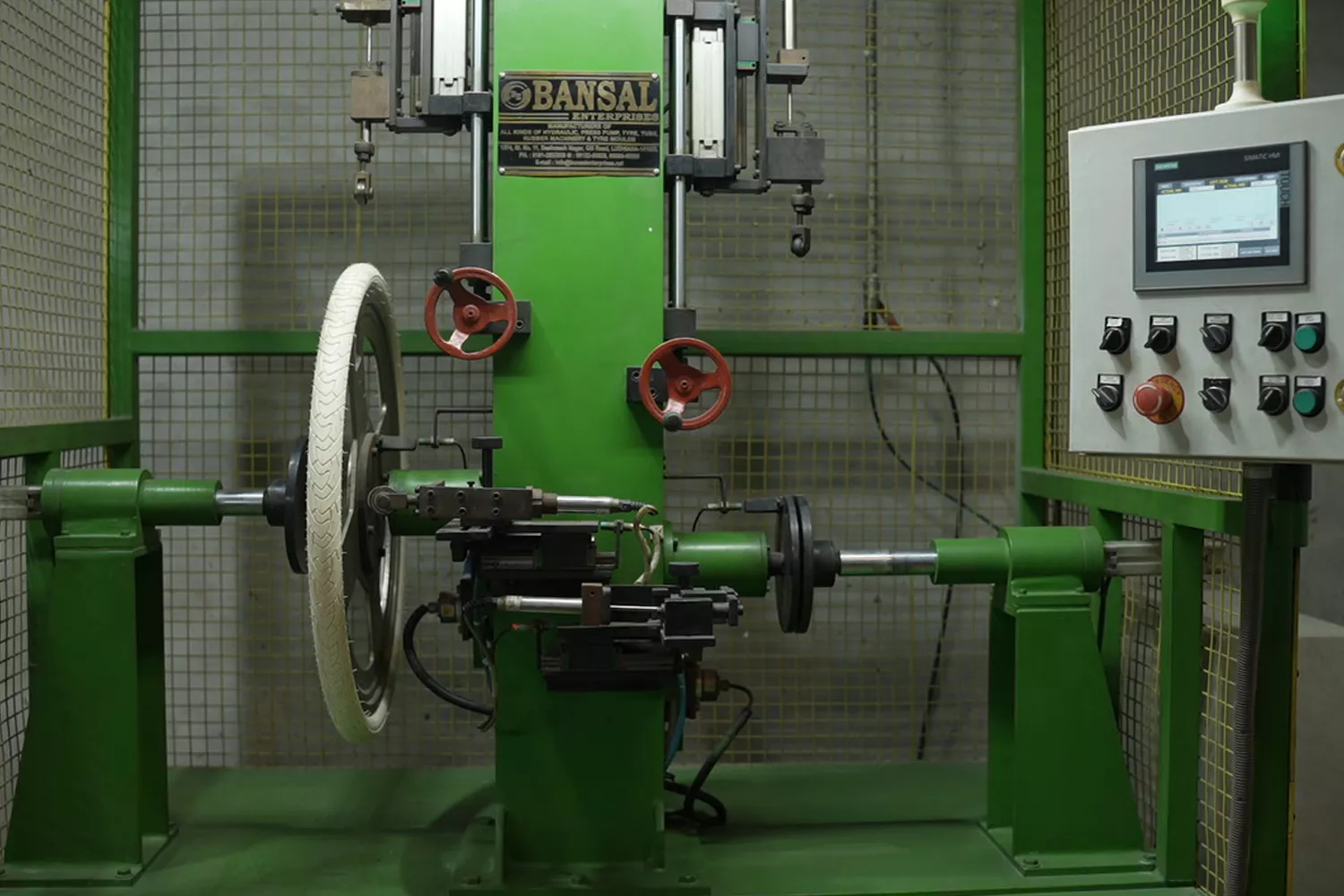
Wobble Testing
The finished tyre is mounted and rotated to measure lateral runout. Any wobble beyond tolerance is flagged — a straight-running tyre starts here.
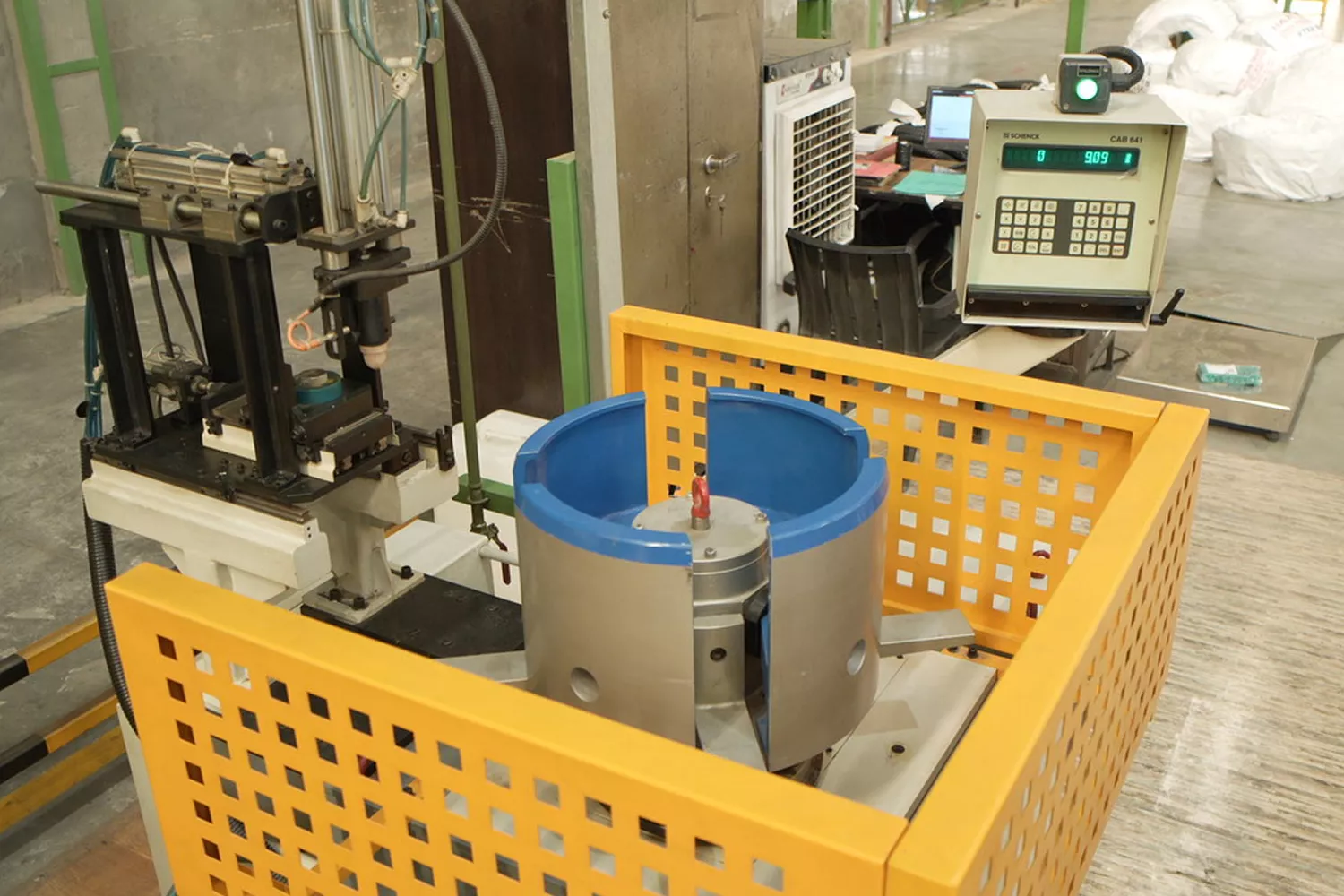
Static Balancing
Mass distribution across the tyre is checked. An unbalanced tyre causes vibration at speed — this test catches it before dispatch.
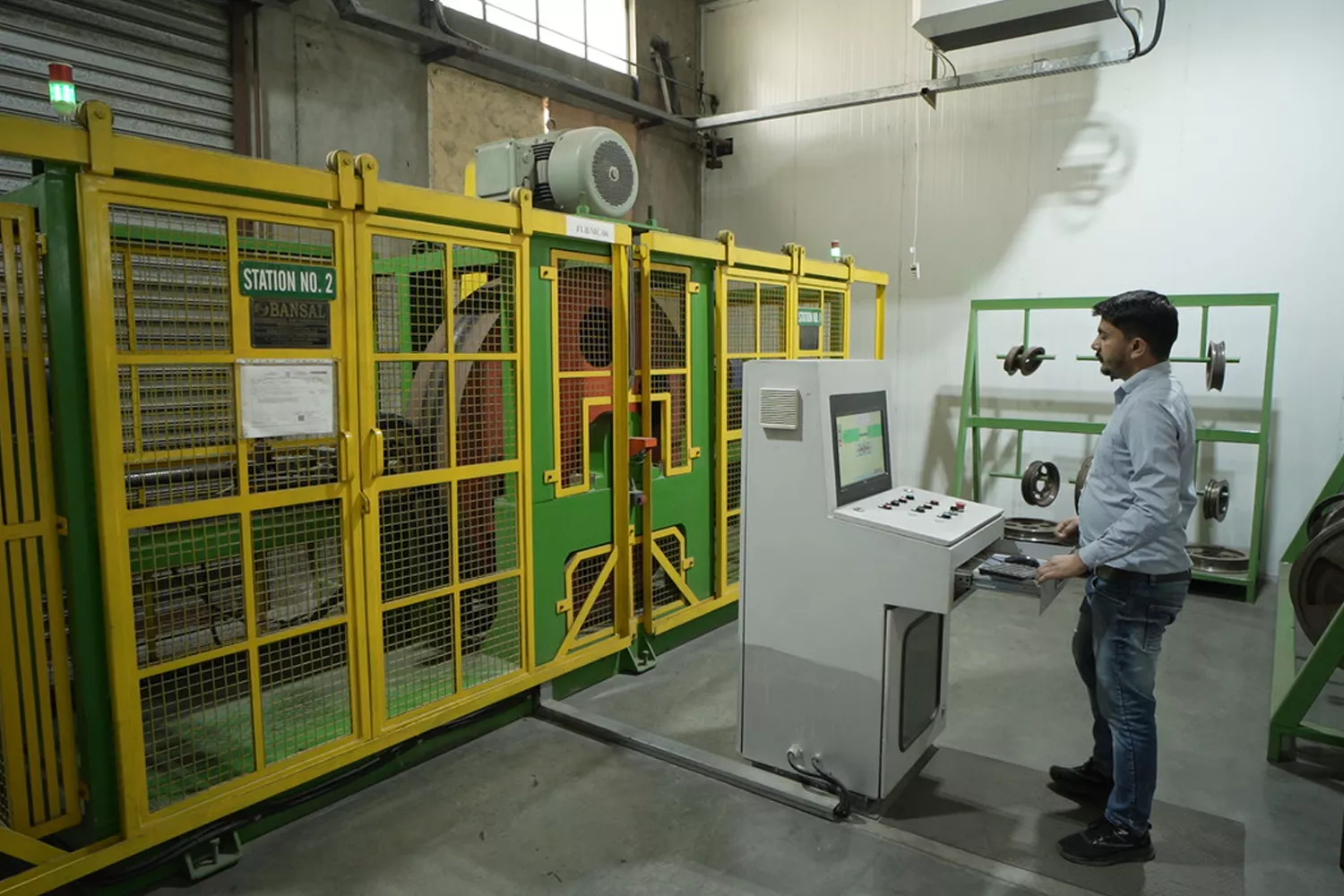
Endurance Testing
The tyre is run under sustained load and rotation on a test machine — simulating real-world mileage to validate durability before the tyre leaves the factory.
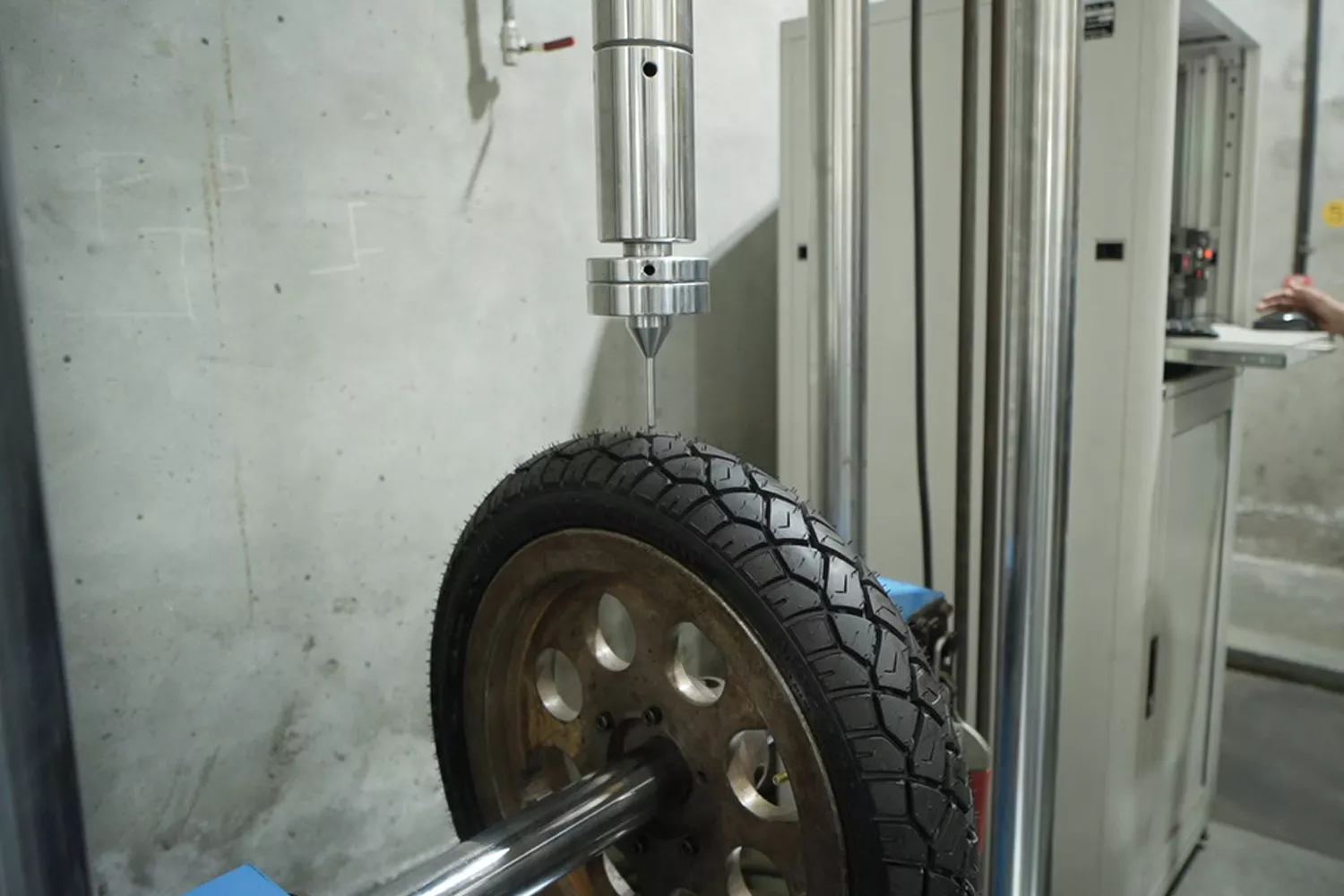
Plunger Testing
A calibrated plunger is pressed into the tyre tread at a defined force measuring resistance to penetration and validating the protection layer's performance.
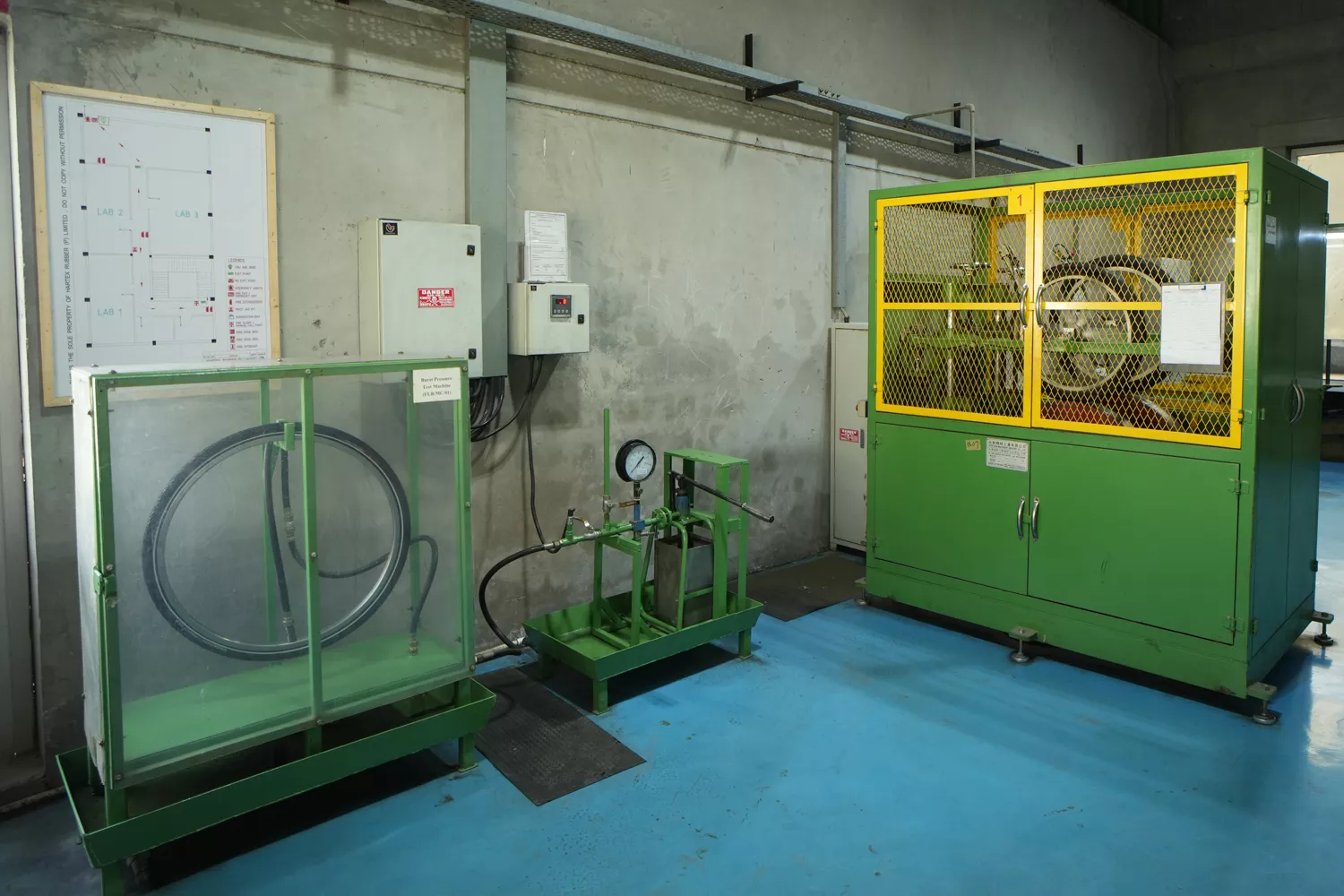
Burst Pressure Testing
The tyre is inflated inside a containment rig to its burst pressure limit — validating structural integrity of the casing and bead at extreme pressures.

Stage 1
Performance — air retention under load
Every tube is inflated and held for 24 hours. Any loss in air retention fails at this stage.Stage 2
Appearance and integrity — visual defects, joint quality, valve integrity
Visual inspection of 100% of tubes. Water submersion test applied to a defined percentage to identify micro-leaks not visible to the naked eye.